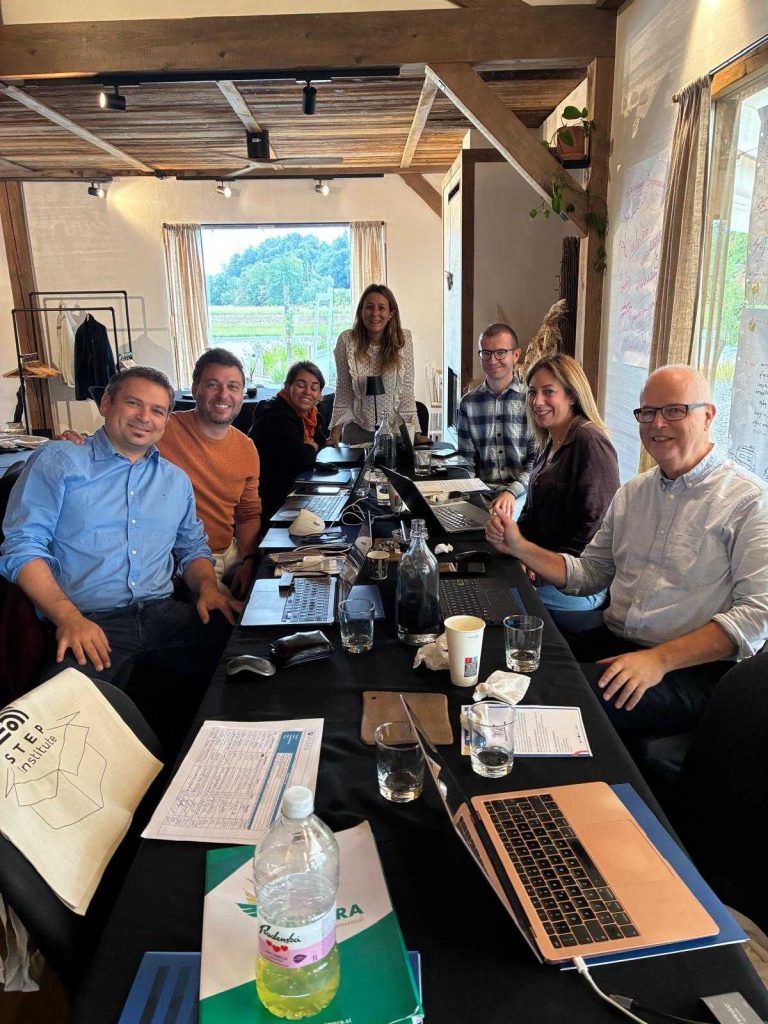
On 17 and 18 September 2026, the UP2NEB partnership gathered in Gornja Radgona, Slovenia, for the project’s final Transnational Project Meeting.
The meeting provided an opportunity to review the final months of project implementation, assess progress across the different work packages and coordinate the activities that will bring UP2NEB towards completion.
A key focus was the finalisation of two major project resources: the UP2NEB Training Programme and the DIY Toolkit. Drawing on feedback from partners, trainers and young participants, these resources will provide practical guidance for applying New European Bauhaus values, Design Thinking and participatory approaches in youth work.
Partners also reviewed the results of the Transnational Learning Activities and the development of the Compendium of Youth Projects. The Compendium will showcase the challenges addressed by young participants, their proposed solutions and prototypes, their connection with New European Bauhaus values, and the ideas developed throughout the project.
Looking ahead, the partnership discussed the next phase of mentoring activities, Local Seminars and dissemination actions. National teams will continue developing their ideas and prototypes through mentoring sessions, while Local Seminars will help share UP2NEB results and introduce wider audiences to the New European Bauhaus approach.
The meeting also looked beyond the current project. Partners exchanged ideas for future cooperation in areas including sustainable materials, inclusive spaces, architecture, sustainable housing, energy innovation, STEAM education and collaboration with local authorities.
The day concluded with participation in the Youth Pitch Event and final gathering of the Slovenian mobility, where partners had the opportunity to see participants’ projects, discuss their prototypes and celebrate their achievements.
With the final stage of UP2NEB now underway, the partnership will focus on completing the project’s resources, supporting young teams, sharing results and building opportunities for the knowledge and ideas developed through UP2NEB to continue beyond the project’s lifetime.